Groupe BPCE: over 200 years of commitment and innovation
Groupe BPCE boasts a unique position in the world of French banking: created in 2009 through the rapprochement between the Banques Populaires and Caisses d’Epargne, the Group stands on the foundations of a legacy going back more than two hundred years. From their very beginnings, the banks belonging to Groupe BPCE have supported far-reaching economic and social transformations driven by the same ambition: to enable everyone to save, finance their projects, and prepare for the future
The origins: the invention of popular savings and business banking
Groupe BPCE stands on two complementary historical foundations: Caisse d’Epargne and Banque Populaire, two retail banking networks set up in the 19th century to meet the need for greater financial inclusion and encourage local economic development.
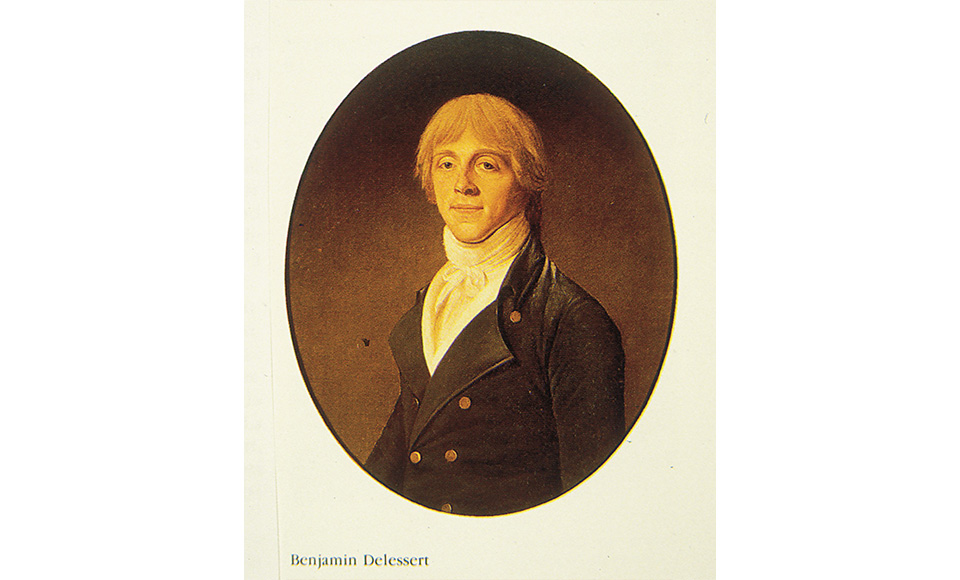
1818: Caisse d’Epargne and the drive to make long-term saving accessible to all
The story begins in 1818 in Paris with the creation of the first Caisse d’Epargne et de Prévoyance. In a society then riven by deep inequality, this banking institution for the first time offered people of modest means a safe way to put money aside, a promise symbolized by the passbook savings account. Officially recognized in 1835 as public-interest organizations, the Caisses d’Epargne went on to open branches throughout all of France. By the end of the 19th century, they were actively involved in financing projects of local interest such as social housing and the first local amenities.
Portrait of Benjamin Delessert, one of the philanthropists behind the creation of the first Caisse d’Epargne in Paris in 1818

1878: Banque Populaire and support for local entrepreneurship
In 1878, at the instigation of the Capuchin friar Ludovic de Besse, the first Banque Populaire was founded in Angers. Its original mission was unequivocal: to meet the specific credit needs of artisans, shopkeepers, and small business owners who, at that time, were shut out of the traditional banking system. Built on a strong cooperative business model, the Banques Populaires provided direct support to the real economy. Their strategic position was consolidated in 1917 by the so-called Clémentel Act, which gave official expression of their status and their role with local economic players.
Portrait of the founders of the first Banques Populaires in the late 19th century
The role of the retail banking networks in the reconstruction and modernization of France
Throughout the 20th century, the banks at the origin of the future Groupe BPCE played a leading role in supporting the national effort during the major phases of reconstruction, and subsequently went on to help modernize the country.
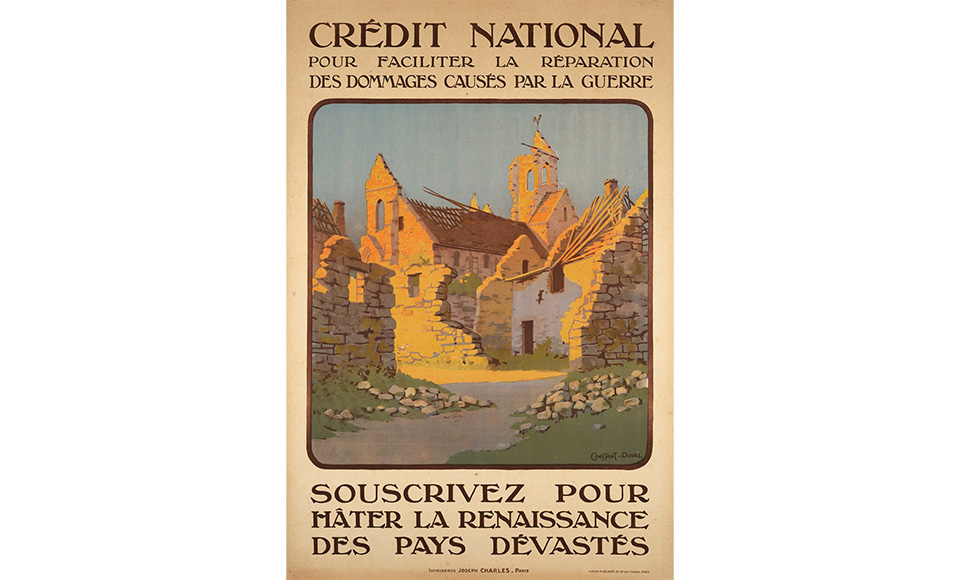
1919: Crédit National and the rebuilding of the economy
In the aftermath of World War I, national reconstruction became an absolute priority. Crédit National was created in 1919 to finance the repair of war damage and kick-start the country’s economic recovery. This institution is one of the historic entities that subsequently led to the creation of Natixis. At the same time, the Banques Populaires stepped up their support for small manufacturers, shopkeepers, and artisans, illustrating the networks’ ability to mobilize in times of national crisis.
One of the first Crédit National posters published in the aftermath of World War I: “To help repair the damage caused by the war, subscribe to hasten the rebirth of the devastated regions”
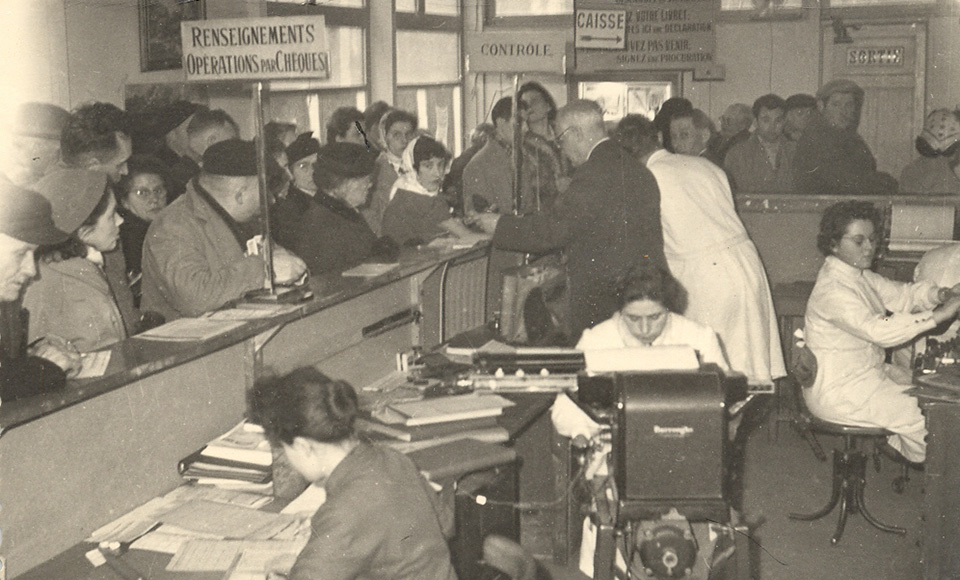
The aftermath of World War II: a society focused on rebuilding itself
After 1945, France faced immense needs for new infrastructure and technical modernization. The Caisses d’Epargne supported the development of France’s regions by massively funding urban development, the building of new housing, and the creation of public amenities. At the same time, the Banques Populaires extended their remit to self-employed professionals and, subsequently, to individual customers.
Crowds inside a Caisse d’Epargne branch in the 1950
New economic challenges and the founding of Groupe BPCE
To serve an ever-growing number of customers and continue making their services simple and accessible to all, the Group’s banks pressed ahead with their expansion and, above all, continued their innovation. At the dawn of the 21st century, the structural transformation of the retail banking networks gathered speed in response to changes in the global economy.

Supporting a changing society and the rise of local banking
The Trente Glorieuses, France’s three postwar decades of growth, saw access to banking services become more widely available to all French people.
The Caisses d’Epargne were granted the status of credit institutions in 1983, before officially becoming cooperative banks in 1999. The Banques Populaires, for their part, diversified their financial expertise. This drive toward specialization reached a key milestone in 2006 with the creation of Natixis, born of the merger between Natexis Banques Populaires and Ixis, bringing together their financing, investment, and asset management business lines within the same entity.
In 1968, with the launch of Intercarte – the first international credit and cash-withdrawal card – Banque Populaire transformed the way its customers gained access to banking services at most banks across Europe

The birth of Groupe BPCE, a key new player in the real economy
In 2009, against the backdrop of the financial crisis, the Banque Populaire and Caisse d’Epargne groups came together to form Groupe BPCE. This union builds on two complementary traditions: that of popular savings and social purpose, and that of cooperative entrepreneurship serving the real economy.
The new group immediately became a major banking player, both firmly rooted in the regions and able to operate on a large scale. A full-service bancassurance group, it brings together its two major cooperative retail banking networks and a range of complementary business lines (insurance, payments, specialized financial services, asset management, and corporate & investment banking), and has strengthened its universal cooperative banking model over the years.
The second-largest banking group in France and the fourth-largest in the eurozone, Groupe BPCE is today a banking giant that continues to expand its activities in France, in Europe, and around the world.
The Natixis CIB trading floor

A cooperative business model geared to the future
For more than two hundred years, the institutions that currently comprise Groupe BPCE have successfully anticipated and supported changes France’s economic, social, and geographic development. Remaining true to its values of a strong local presence, public interest, and regional roots, Groupe BPCE constantly adapts to the challenges and transitions of the world of today.
The BPCE towers in the 13th arrondissement of Paris
Also worth exploring:
To watch this YouTube video, you must accept cookies from the Social Networks category, which includes YouTube, by clicking here.

The Groupe BPCE logo: the union of its founding brands
Drawn from the corporate colors of Banque Populaire and Caisse d’Epargne, the purple planet expresses their shared commitment within Groupe BPCE.
Key dates of Groupe BPCE history
1818 – Founding of the first Caisse d’Epargne in Paris
1878 – Birth of the first Banque Populaire in Angers
2006 – Creation of Natixis
2009 – Founding of Groupe BPCE, the second-largest banking group in France