The event will generate local economic momentum but is not expected to profoundly alter national growth trajectories.
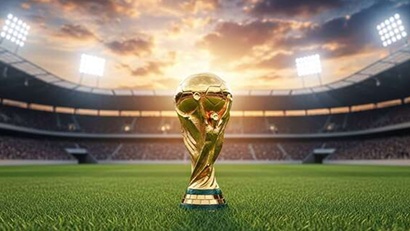
World Cup 2026: what real economic impact for the host countries?
Thursday 11 June 2026
As the 2026 FIFA World CupTM, co-hosted by the United States, Mexico, and Canada, approaches, economic expectations are high. This event, the largest in the tournament’s history with 48 teams competing, promises a global spectacle. But beyond the sporting excitement, what will be the real benefits for the economies? A recent study by Natixis Corporate & Investment Banking (Natixis CIB), a subsidiary of Groupe BPCE, provides a nuanced analysis.
A global event with limited macroeconomic benefits
More nuanced economic projections than expected
While major international sporting events are often synonymous with increased tourism, investment, and consumption, history shows that their actual benefits rarely live up to forecasts, especially for mature economies.
Natixis CIB’s economic analysis estimates that the impact of the 2026 World Cup on GDP growth will remain contained:
- Mexico: an estimated increase of between 0.1% and 0.2% in 2026.
- United States: a more modest impact, around 0.05%.
- Europe: no significant economic benefits expected.
A contrast with the impact of major cultural events
For comparison, another Natixis CIB analysis showed that some major cultural events, such as Céline Dion’s series of concerts in Paris in 2026, could generate a more concentrated and significant economic impact, estimated between 570 million and 1 billion euros, thanks to international visitors and high value-added spending.
Temporary and localized growth for host countries
Mexico: a positive but temporary effect
Mexico will host 13 matches, including the opening game in the legendary Azteca Stadium. While the benefits will be positive for tourism and local consumption in Mexico City, Guadalajara, and Monterrey, the overall effect on the country’s economy is expected to be modest and temporary, due to an already well-developed tourism industry and infrastructure.
The United States: a boost for services, not for investment
With 78 matches spread across 11 cities, the United States will be the heart of the tournament. The economic impact will primarily come from an increase in activity in the service sector (hotels, restaurants, transport) rather than from large infrastructure projects. However, this momentum could be hampered by lower-than-expected hotel bookings and high ticket and travel costs, which could impact fan spending.
In Europe: favorites on the field, but not economically
While european nations like France and Spain are among the favorites in the competition, the continent is not expected to derive any measurable economic benefit from the event.
What are the probabilities of victory according to our experts?
Thanks to a Monte-Carlo simulation model (100,000 occurrences) taking into account multiple factors (FIFA ranking, history, team form), Natixis CIB experts establish the following predictions:
- France: 26.2% probability of winning
- Spain: 24.6%
- Argentina: 13.6%
- Portugal: 12.4%
Beyond economics, an issue of image and attractiveness
In conclusion, while the economic impact of the 2026 World Cup will be more limited than hoped, the event represents a tremendous lever for image and « soft power ». For the host countries, the main challenge will be to transform this global visibility into a lasting asset for their attractiveness.
Natixis CIB: economic expertise for large corporates
Natixis Corporate & Investment Banking is the subsidiary of Groupe BPCE dedicated to large corporations, financial institutions, institutional investors, and public sector entities.
Its teams of economists and strategists continuously analyze major global trends to advise clients and decipher the issues shaping tomorrow’s economy.
This article constitutes a strictly informative economic analysis. The trademarks FIFA, FIFA World Cup 2026™, and any other associated distinctive signs are the property of FIFA. Groupe BPCE is neither a partner nor an official sponsor of FIFA or the FIFA World Cup 2026™.